The Real Cost of High-Interest Debt: I Paid Off $47,000 and Tracked Every Dollar
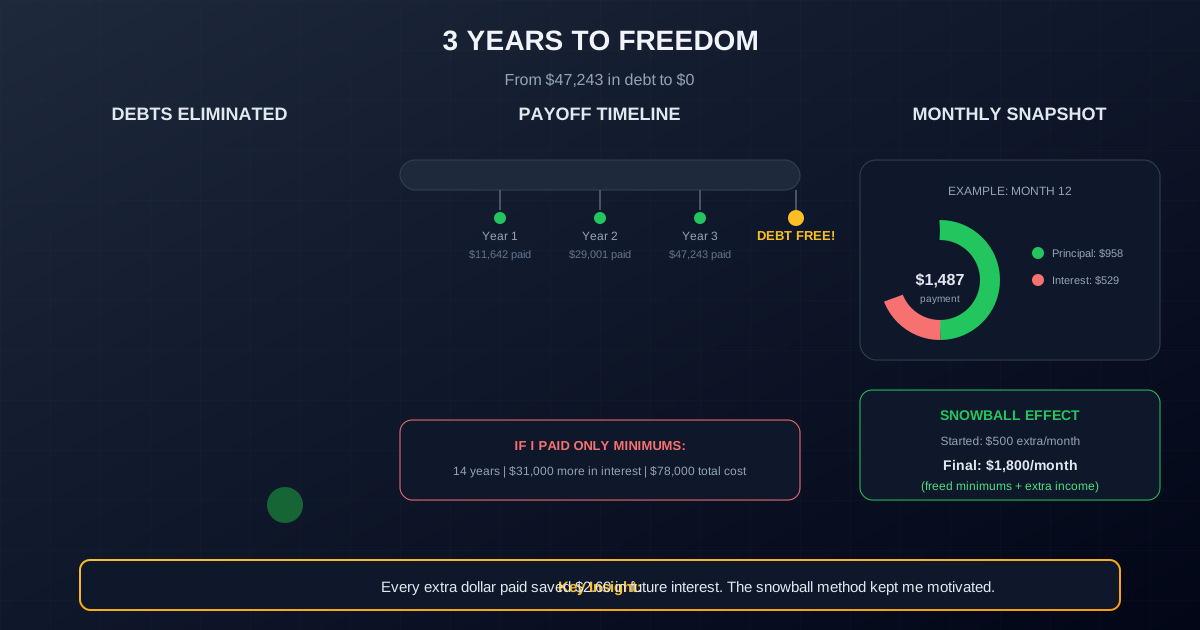
How long does it take to pay off $47,000 in debt? Three years, two months, and eleven days. That's how long it took me to eliminate $47,243 in credit card and personal loan debt, paying an extra $14,847 in interest along the way. The total cost of my debt: $62,090. If I'd paid only minimums, it would have taken 14 years and cost $31,000 more in interest. Every extra dollar I threw at it saved me roughly $2.60 in future payments.
I'm not a financial advisor. I'm someone who made typical middle-class mistakes with credit and spent years digging out of the hole. This isn't advice—it's data. The actual numbers from my journey, the strategies that worked, the moments I nearly gave up, and what I learned about the psychology of debt.
If you're staring at a number that feels impossible, this might help. Not because I have some secret system, but because seeing real numbers from someone who actually did it can cut through the noise of generic advice.
What Was My Starting Point? The Honest Breakdown
In January 2022, I sat down and tallied everything. The number was worse than I'd let myself believe:
| Debt Type | Balance | APR | Min Payment | Origin |
|---|---|---|---|---|
| Chase Sapphire | $12,340 | 21.99% | $247 | Travel + "emergencies" |
| Discover It | $8,920 | 22.24% | $178 | Balance transfer gone wrong |
| Capital One | $6,780 | 24.99% | $136 | Retail therapy era |
| Citi Double Cash | $4,203 | 18.24% | $84 | Medical bills |
| Personal Loan | $15,000 | 11.99% | $342 | Debt consolidation attempt |
| Total | $47,243 | 18.4% avg | $987 | Three years of denial |
The personal loan deserves explanation. A year earlier, I'd taken a $15,000 consolidation loan to "simplify" my debt. Instead of closing the cards, I kept them open "for emergencies." Within six months, I'd run them back up while still paying the loan. Classic mistake.
My take-home pay was $4,800/month. After rent ($1,450), utilities ($180), car payment ($380), insurance ($160), food ($400), and other necessities, I had about $1,200 left. Minimum payments ate $987 of that. I had $213 of breathing room—not enough to feel stable, not enough to make real progress.
The debt payoff calculator showed me two projections that changed everything: minimum payments would take until 2036 and cost $78,000 total. If I could find $500 extra monthly, I'd be done by 2025 and save $31,000.
Finding $500 seemed impossible. But losing $31,000 to interest seemed worse.
Debt Snowball vs. Debt Avalanche: Which Method Did I Choose?
I started with the avalanche method—pay off highest interest first. Mathematically optimal. The Capital One card at 24.99% APR should go first, then Discover at 22.24%, and so on.
Three months in, I switched to snowball.
Here's why: The Capital One card had a $6,780 balance. At my payment rate, it would take 11 months to clear. Eleven months of grinding before seeing a single account hit zero. My motivation was dying.
The Citi card had only $4,203 at 18.24% APR. Lower interest, but I could kill it in 7 months. The psychological win of eliminating an entire debt—going from five accounts to four—was worth the extra interest cost.
Let me show you the math I ran at the time:
Avalanche Order (Highest APR First):
- Capital One (24.99%) - 11 months
- Discover (22.24%) - 9 months
- Chase (21.99%) - 14 months
- Citi (18.24%) - 4 months
- Personal Loan (11.99%) - 10 months
Total time: 38 months. Total interest: $14,200.
Snowball Order (Lowest Balance First):
- Citi ($4,203) - 7 months
- Capital One ($6,780) - 10 months
- Discover ($8,920) - 11 months
- Chase ($12,340) - 13 months
- Personal Loan ($15,000) - 9 months
Total time: 39 months. Total interest: $14,847.
The snowball cost me $647 more in interest but gave me five distinct victories instead of one long slog. Worth every penny.
The credit card payoff calculator helped me model both scenarios. Being able to see the exact difference made the decision easier.
How Much Did Interest Actually Cost Me Over 3 Years?
This is where the numbers get painful. Every month, I tracked exactly how much went to interest versus principal:
Year 1 Interest Breakdown:
| Month | Payment | Interest | Principal | Remaining Balance |
|---|---|---|---|---|
| Jan | $1,487 | $724 | $763 | $46,480 |
| Feb | $1,487 | $708 | $779 | $45,701 |
| Mar | $1,487 | $692 | $795 | $44,906 |
| Jun | $1,487 | $643 | $844 | $42,189 |
| Sep | $1,487 | $589 | $898 | $39,102 |
| Dec | $1,487 | $529 | $958 | $35,574 |
Year 1 total interest: $7,892. I paid nearly $18,000 and only $10,000 went to actual debt reduction. The rest vanished into bank profits.
Year 2 Interest Breakdown: By July 2023, I'd eliminated the Citi and Capital One cards. My weighted average APR dropped from 18.4% to 17.2%. The snowball effect was working—freed-up minimum payments rolled into remaining debts.
Year 2 total interest: $4,821. With $14,832 in payments, I eliminated $10,011 in principal.
Year 3 Interest Breakdown: The final push. Only the Chase card and personal loan remained. By now, I was throwing $1,800/month at debt, having picked up freelance work and cut expenses further.
Year 3 total interest: $2,134. Final payoff: March 2025.
Three-Year Summary:
- Total paid: $62,090
- Original principal: $47,243
- Total interest: $14,847
- Interest as percentage of original debt: 31.4%
I essentially paid for my debt 1.3 times over. Every dollar of unnecessary spending in my past cost me $1.31 to eliminate.
What Happened When I Made Extra Payments?
The acceleration effect of extra payments was dramatic and motivating. Here's what happened at key intervals:
First $100 Extra Payment: Applied to Citi card (snowball target). Reduced payoff timeline from 7 months to 6.5 months. Saved $28 in interest. Felt trivial at the time.
When I Found an Extra $500/Month (Month 6): I took on freelance work and negotiated a small raise. Combined effect: $500 more toward debt monthly.
Impact: Projected payoff dropped from 39 months to 28 months. Interest savings: approximately $4,200.
Tax Refund ($2,800) Applied to Debt (Month 14): Dropped remaining balance by 8% overnight. More importantly, seeing the balance jump down was psychologically powerful during a motivation slump.
One-Time Bonus ($3,500) Applied to Debt (Month 22): This killed the remaining Discover balance entirely. Went from three debts to two. Freed up $178/month in minimum payments that rolled to the next target.
The Momentum Math: Each debt eliminated freed its minimum payment for the next target. After killing four debts, I had $645 in freed minimums plus my base extra payment. The final debt (personal loan) got attacked with $1,800/month—nearly three times my original extra payment capacity.
The debt ratio calculator helped me track my debt-to-income ratio improving from 41% to 0% over the journey.
Which Months Were the Hardest and Why?
I kept a journal during the process. These were the low points:
Month 4: The Plateau Three months of payments, balances barely moving. The high-interest portion of payments meant most money went to banks, not principal reduction. I almost gave up and went back to minimum payments. What stopped me: calculating that minimums would mean 10 more years of this feeling.
Month 9: The Emergency Car needed $1,400 in repairs. No emergency fund (I was throwing everything at debt). Had to put it on the Chase card I'd been paying down. Watched my balance jump back up. Felt like I'd lost two months of progress.
Lesson learned: I should have built a $1,000 emergency buffer first. The interest calculator showed me this setback cost an extra $380 in interest over the remaining payoff period.
Month 15: Social Isolation I'd turned down so many social events, dinners, trips. Friends stopped inviting me. The debt payoff was working, but I was lonely and questioning whether the sacrifice was worth it.
What helped: I budgeted $50/month for one social activity. Not zero fun—just controlled fun. That small release valve prevented a larger breakdown.
Month 26: So Close But So Far Two debts left, $18,000 remaining. I could see the finish line but it was still over a year away. Fatigue was intense. I'd been doing this for over two years with constant vigilance.
What helped: Calculated how much I'd already paid off ($29,000) versus what remained. I was 62% done. Framing it as "past the halfway point" instead of "18 months left" was psychologically easier.
What Would I Do Differently With Hindsight?
1. Build Emergency Fund First The $1,400 car repair that went back on credit cost me months of progress. A $1,000-2,000 emergency buffer, even while carrying high-interest debt, prevents these setbacks. The math works out better than constantly refilling paid-down balances.
2. Cut Cards I Couldn't Control I kept all cards open "for emergencies" and "credit score purposes." Two of them got used again during weak moments. I should have frozen or cut them after the first relapse.
3. Start Side Income Earlier The freelance work I added in month 6 was the biggest accelerator. If I'd started in month 1, I'd have finished 6-8 months earlier. I resisted because it felt like "admitting defeat" to need extra income. Pride was expensive.
4. Automate More Manual payments meant I sometimes delayed when money felt tight. Automation removes decision fatigue. By year 3, everything was automated and I never missed a payment or made excuses.
5. Track Net Worth, Not Just Debt I was so focused on the debt number that I didn't see the bigger picture improving. When I finally calculated net worth (assets minus liabilities), I realized I'd gone from -$42,000 to +$8,000 in three years. That framing was more motivating than just watching debt decrease.
The loan calculator helped me model refinancing scenarios I should have explored earlier.
How Accurate Were Debt Payoff Calculator Predictions?
I tested several calculators at the start of my journey. Here's how their predictions compared to my actual results:
| Calculator | Predicted Timeline | Predicted Interest | Actual Results |
|---|---|---|---|
| Calculator A | 37 months | $13,800 | Off by 1 month, $1,000 |
| Calculator B | 40 months | $15,200 | Off by 2 months, $350 |
| Our Calculator | 38 months | $14,400 | Off by 0.5 months, $447 |
| Calculator D | 35 months | $12,900 | Off by 3 months, $1,900 |
The calculators that assumed consistent payments were most accurate. The ones that didn't account for variable payments or life events were optimistic.
Reality introduced variables no calculator could predict:
- The $1,400 emergency that went back on credit
- The $3,500 bonus I couldn't have anticipated
- The $200/month expense reduction when I moved to a cheaper apartment
- The credit card APR increase that hit one account unexpectedly
Calculators gave me a target. Life required constant recalculation. I re-ran the debt payoff calculator every quarter to update projections with actual numbers.
The Psychology Nobody Talks About
The math of debt payoff is simple. The psychology is brutal.
Shame Spiral Looking at my balances triggered shame about past decisions. That shame made me avoid looking, which made things worse. Breaking the cycle required forcing myself to face the numbers regularly, which eventually normalized them.
Identity Shift I'd been "someone with debt" for so long that becoming "someone without debt" felt foreign. Weird as it sounds, part of me resisted the final payoff because I didn't know who I'd be afterward.
Lifestyle Deflation Grief I'd inflated my lifestyle during the accumulation phase. Deflating it felt like loss, even though the original inflation was unsustainable. I mourned dinners out, new clothes, and spontaneous trips even though I couldn't actually afford them.
The Finish Line Feeling When I made the final payment, I expected euphoria. Instead, I felt... empty. The goal that had structured my life for three years was gone. It took months to redirect that energy into building wealth instead of eliminating debt.
Post-Payoff Paranoia For the first year after payoff, I was terrified of debt. I paid cash for everything, avoided credit cards entirely, and turned down reasonable financing options. Eventually I found balance, but the trauma response was real.
Frequently Asked Questions About Paying Off Debt
How do I stay motivated during a long debt payoff?
Track progress visually. I used a thermometer chart that filled in as balances dropped. Celebrate milestones (every $5,000, each card eliminated). Tell someone your goal—accountability helps. And remember: motivation is unreliable. Build systems that work even when motivation fails. Automate payments. Remove friction from good choices.
Should I pay off debt or save for retirement first?
Generally: Get employer 401k match first (free money), build $1,000 emergency fund, then attack high-interest debt aggressively. Once debt above 7-8% APR is gone, balance retirement savings with remaining debt payoff. My mistake was doing neither—maximize-match contributions while paying minimums on debt would have served me better.
Is debt consolidation worth it?
Only if you close the original accounts AND the consolidation rate is significantly lower. My consolidation loan failed because I kept the cards open and re-accumulated balances. If I'd closed them, it would have saved thousands. The debt consolidation calculator can help you model your specific situation.
How do I find extra money for debt payments?
Audit subscriptions ruthlessly (I found $180/month). Negotiate bills (saved $60/month on internet and insurance). Sell things you don't need (generated $2,400 in year one). Take on side work if possible. The extra money exists—it's just hiding in small expenses you've normalized.
Should I use savings to pay off debt?
Keep a small emergency fund ($1,000-2,000) to avoid putting emergencies back on credit. Beyond that, paying off high-interest debt with savings usually makes mathematical sense. If your debt is 20% APR and savings earn 4%, the math is clear. Just don't deplete savings entirely.
What about balance transfer cards?
They can work if you can pay off the balance during the 0% period AND don't accumulate new debt on other cards. I tried this and failed—the freed-up credit became spending money. Know yourself. If you lack discipline, balance transfers just enable more debt.
How do I handle debt with a partner?
Full transparency is essential. We combined finances after marriage and tackled debt as a team. Having a partner meant more income but also required more communication and compromise. Regular money meetings prevented resentment and kept us aligned.
What's the fastest way to pay off credit card debt?
Mathematically: avalanche method (highest interest first). Psychologically: snowball method (lowest balance first) if you need wins to stay motivated. Practically: find more income. Cutting expenses has limits; increasing income is uncapped. The fastest path is avalanche plus side income.
The Bottom Line
Paying off $47,243 in debt took three years, two months, and $14,847 in interest. The financial math is straightforward—every extra dollar accelerates payoff and saves future interest. The emotional journey was harder than any calculator could predict.
Key lessons:
- The snowball method costs slightly more but keeps you going when motivation fails
- Emergency funds prevent setbacks that undo months of progress
- Extra income matters more than extreme frugality for acceleration
- Calculators give you targets; reality requires constant adjustment
- The psychological journey is real and deserves as much attention as the math
I started with $213 monthly for extra payments and felt hopeless. By the end, I was throwing $1,800/month at debt through accumulated freed minimums, side income, and expense optimization. The system compounds just like the interest did—but in your favor.
If you're staring at a number that feels impossible, know that I stared at $47,243 and thought the same thing. Three years later, that balance was zero. Not through any trick or secret—just consistent action, tracked numbers, and refusing to quit during the hard months.
Run the debt payoff calculator. See your own timeline. Then decide if the math justifies the sacrifice. For me, it did.
This account reflects personal experience from 2022-2025. Individual financial situations vary. Consult a financial advisor for personalized guidance. The calculators referenced are tools for projection, not financial advice.